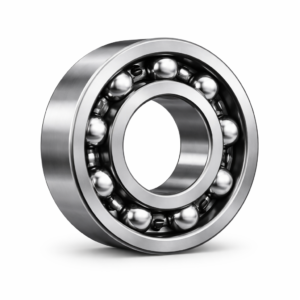
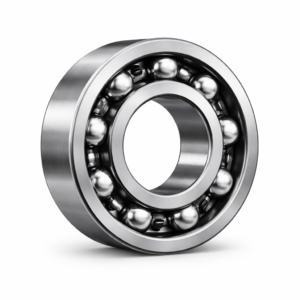
6203-2RS Deep Groove Ball Bearing – OEM Replacement
Overview
The 6203-2RS is one of the most widely used deep-groove ball bearings in light industrial and consumer equipment. It’s designed for low friction, dependable radial load support, and moderate axial loads in both directions, making it a reliable OEM replacement when you need quick sourcing without changing your machine design.
Applications
Common uses include electric motors, pumps, fans/blowers, small gearboxes, conveyors, lawn and garden equipment, and general rotating assemblies where contamination protection is important. The double rubber seals help keep grease in and dirt out for longer service intervals.
Compatible Machines
You’ll frequently find 6203 bearings in fractional-horsepower motors, HVAC blower motors, small centrifugal pumps, shop tools, and belt-driven machinery. If your equipment runs in dusty or washdown-adjacent areas, the 2RS style is often preferred over open bearings.
Technical Specifications
- Bore (ID): 17 mm
- Outside Diameter (OD): 40 mm
- Width: 12 mm
- Sealing: 2RS rubber seals (double sealed)
- Typical material: chrome steel (52100) or equivalent
- Lubrication: pre-greased for general-purpose duty
Cross References
Cross references commonly include 6203, 6203-2RS, 6203-RS, 6203-ZZ (shielded), and equivalent designations used by major brands. If your existing bearing includes a clearance suffix (e.g., C3), match it for thermal expansion or higher speed use.
Replacement Information
To replace, verify the ID/OD/width on the old bearing or in your parts list. Confirm shaft and housing fits, then choose sealing to match the environment (2RS for contamination control, ZZ for lower drag). For high-heat applications, specify appropriate grease and clearance.
Why Source With Us
We help you source OEM-equivalent bearings fast, with the option to match brand preference, clearance, and sealing. Submit an RFQ with your bearing code and quantity and we’ll respond with availability, lead time, and suitable alternates if you need them.
Internal Links
Quick FAQ
What does the suffix mean? Common suffixes include ZZ (metal shields) and 2RS (rubber seals). Seals help retain grease and exclude contamination.
How do I confirm fit? Match the bearing designation, bore size, OD, and width. If your old bearing has an extra internal clearance suffix (like C3), keep that specification.
Can I upgrade quality? Yes—use premium grades for higher speeds, higher temperatures, or continuous-duty service.