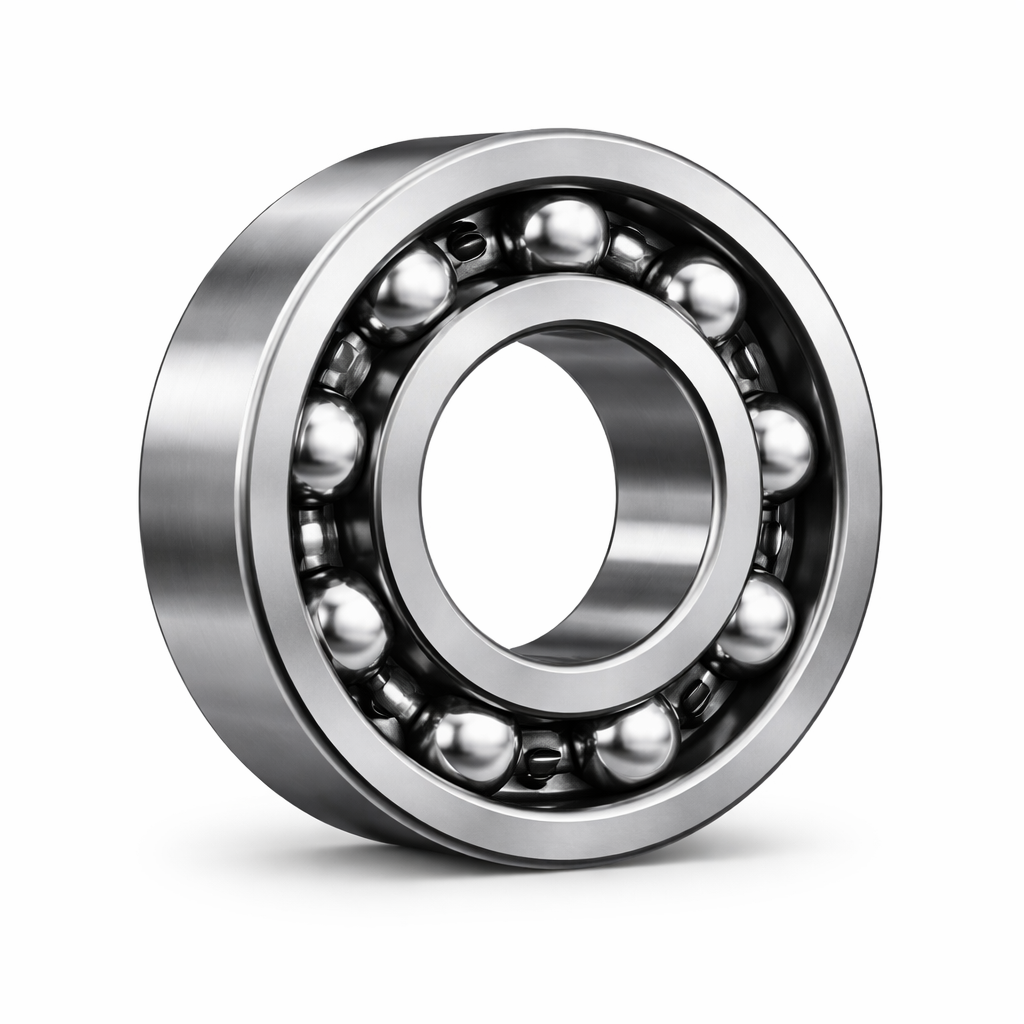
6210 Deep Groove Ball Bearing – OEM Replacement
Overview
The 6210 deep groove ball bearing is a high‑volume, standard bearing used across motors, pumps, conveyors, and general industrial rotating equipment. If you’re replacing an OEM part, this page is built to help you source the correct bearing quickly while matching the sealing and clearance that your application needs.
Applications
Common applications include electric motors, fans/blowers, centrifugal pumps, gear drives, material handling conveyors, and belt‑driven machinery. In cleaner environments, shielded configurations can reduce drag; in dusty or humid areas, sealed options help extend service life.
Compatible Machines
You’ll find 6210 bearings used in packaging lines, HVAC equipment, shop tools, agricultural implements, light gear reducers, and many OEM assemblies that rely on standardized bearing sizes. If your equipment has a parts manual, confirm the full bearing designation including any suffixes.
Technical Specifications
- Standard size reference: 50×90×20 mm (ID×OD×Width) — verify for your exact brand/spec
- Bearing type: single-row deep groove ball bearing
- Load capability: strong radial support with moderate axial load capacity
- Materials: bearing-grade steel (common) with options for stainless or specialty grades
- Lubrication: pre-greased (sealed/shielded) or re-greasable depending on configuration
- Options: Open, ZZ (metal shields), 2RS (rubber seals), and internal clearance variants such as C3
Cross References
Cross references commonly include 6210, 6210-ZZ, 6210-2RS, and 6210 C3 variants. Manufacturers may use different suffix formatting (e.g., 2RS1, DDU, LLU). Match the function (seal vs shield) and internal clearance rather than just the letters.
Replacement Information
Confirm the bearing by measuring the bore, outside diameter, and width or by reading the code on the old bearing. If you’re replacing a bearing that runs hot, at higher speed, or with tight fits, internal clearance (often C3) may be required. During installation, press only on the ring being fitted (inner ring for shaft fits, outer ring for housing fits) to avoid damaging the raceways.
Why Source With Us
We make sourcing OEM replacement bearings simple: send an RFQ with the bearing code, quantity, and any requirements (sealing, clearance, temperature, brand preference). We’ll respond with availability, lead time, and suitable alternates so you can keep production moving.
Internal Links
Quick FAQ
Open vs ZZ vs 2RS? Open bearings have no closures; ZZ uses metal shields; 2RS uses rubber seals for better contamination control.
What does C3 mean? C3 is a common internal clearance option used when heat or tight fits reduce clearance during operation.
How do I request a quote? Send the bearing code, quantity, and any suffixes (seals/shields/clearance). We’ll reply with availability and alternates.